 IEEE Xplore
Welcome — I’m glad you’ve found your way here. Whether you’re visiting out of curiosity, research, or by chance, I invite you to explore my research works. You may discover ideas that connect with your own journey — or spark new ones. If you see potential for us to work together in any capacity, I’d be delighted to hear from you.
About
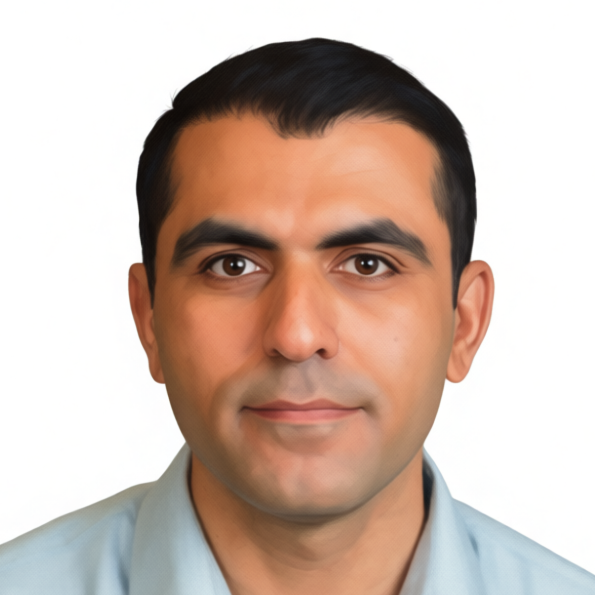
I’m Mohammad Rowshan, an Early-Career Academic (ECA) Fellow in the School of Electrical Engineering and Telecommunications at the University of New South Wales (UNSW), Sydney.
I am open to opportunities in both academia and industry, including collaborations, projects, and positions.
The surname Rowshan (and variants such as Roshan) originates from Persian/Avestan name raoxšna, meaning ‘bright’, ‘shining’, or ‘illuminated.’ While it shares ancient Indo-European roots with the English word ‘light’ and the Latin ‘lux,’ it carries a deeper cultural meaning implies intellectual enlightenment and spiritual clarity. While often a surname in the West and South Asia, it is widely used as a given name across Central Asia (often transliterated as Raushan). The variants Roshna and Roshni are specific feminine derivatives, referring to a ‘ray of light’ or ‘radiance,’ and are used almost exclusively for women. The name is also historically connected to Roshanak, better known in the West as Roxana, the wife of Alexander the Great.
Education
- Ph.D. in Electrical Engineering, Monash University, 2021,
- M.Sc. in Integrated Circuit Design Engineering, The Hong Kong University of Science and Technology (HKUST), 2016,
- B.Eng. (Hons) in Electrical and Electronic Engineering, University of Nottingham, 2015 (ranked 1).
During my doctoral studies, I spent six months at the Telecommunications Circuits Laboratory (TCL) at École Polytechnique Fédérale de Lausanne (EPFL), Switzerland. I also have a Bachelor of Science degree in Industrial Engineering and work experience in this field.
Research Interests
I am passionate about tackling fundamental problems in the field, uncovering deep mathematical and structural properties along with their applications, and transforming abstract ideas into practical technologies. My research spans several interconnected areas:
- Classical and quantum error-correction codes
- Decreasing monomial codes (polar codes, Reed-Muller codes, and their variants)
- Quantum LDPC codes: Adapting to hardware constraints and noise models
- Quantum stabilizer codes and approaches to fault‑tolerant quantum computation
- Wireless communications and signal processing
- Hardware architecture design
- Machine learning
New Release in IEEE Series on Digital & Mobile Communications

Polar Codes: From Theory to Practice — now available from IEEE Press & Wiley.
ISBN: 9781119911739
Learn more here: Wiley Online Library | IEEExplore
Book Preview: Google Books
Feel free to share any feedback to help improve future editions.
Available at: Wiley | Amazon | Google Play | BookFinder.com
Borrow from your closest library: WorldCat